
New Exhibition reveals the hidden story behind Singapore’s “City in Nature”
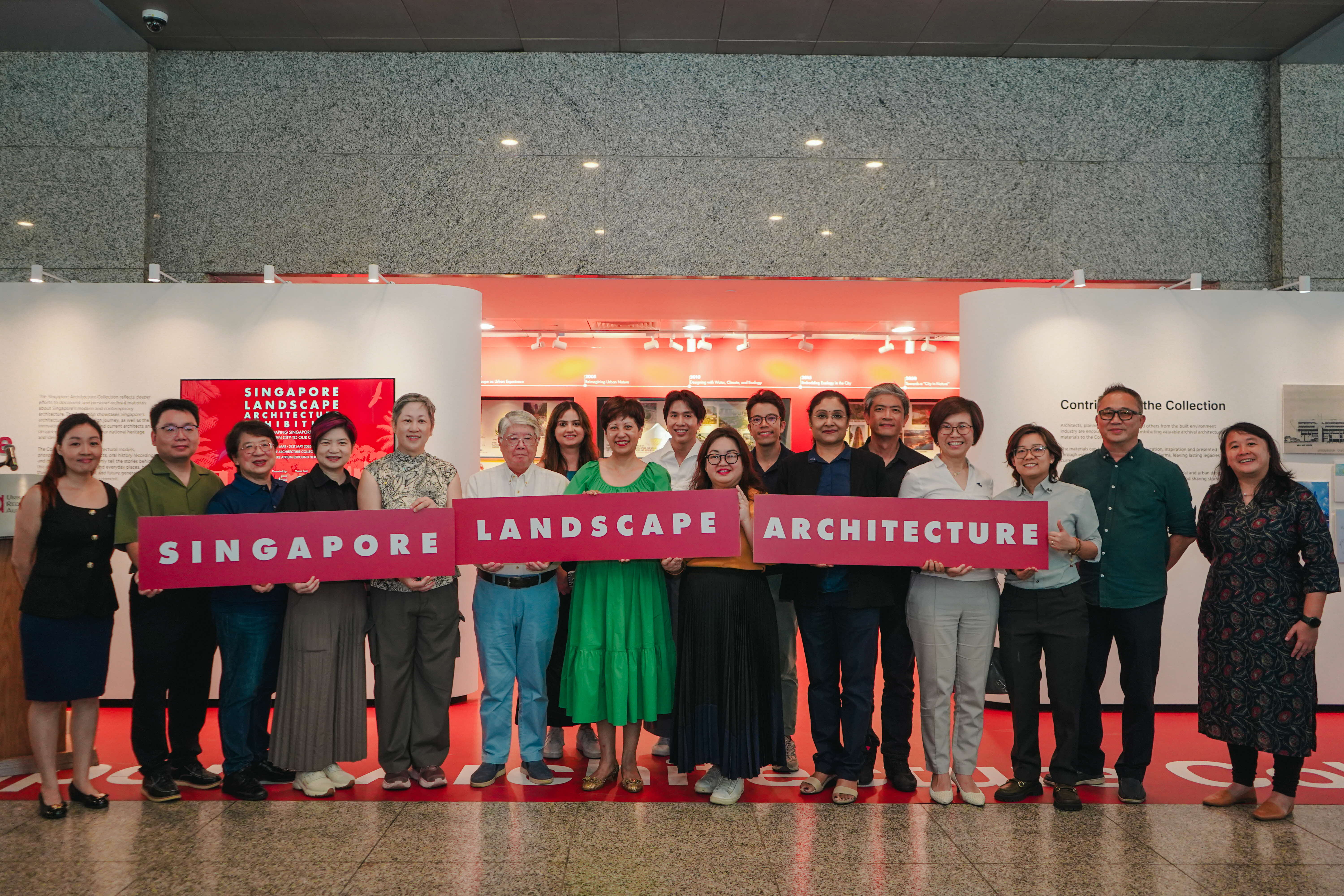
Singapore landscape architecture exhibition marks 40 years of SILA and celebrates six decades.
Long before the phrase “City in Nature” entered Singapore’s planning vocabulary, landscape architects were already shaping parks, coastlines, streetscapes and ecological networks across the island. A new exhibition opening at the URA Centre tells this story, tracing the evolution of landscape architecture in Singapore from its early pioneers to today’s climate-responsive urban landscapes.
Presented by the Singapore Institute of Landscape Architects (SILA), the Singapore Landscape Architecture Exhibition marks the institute’s 40th anniversary while also looking beyond it, showcasing the earlier foundations of landscape architecture that helped shape Singapore’s green transformation.
Held in support of the Singapore Architecture Collection (SAC) and hosted at the Urban Redevelopment Authority (URA) Centre, the exhibition was officially launched by Guest-of Honour Indranee Rajah, Minister in the Prime Minister’s Office and Second Minister for Finance and National Development, at the Singapore Architecture Collection Gallery located within the URA Centre atrium.
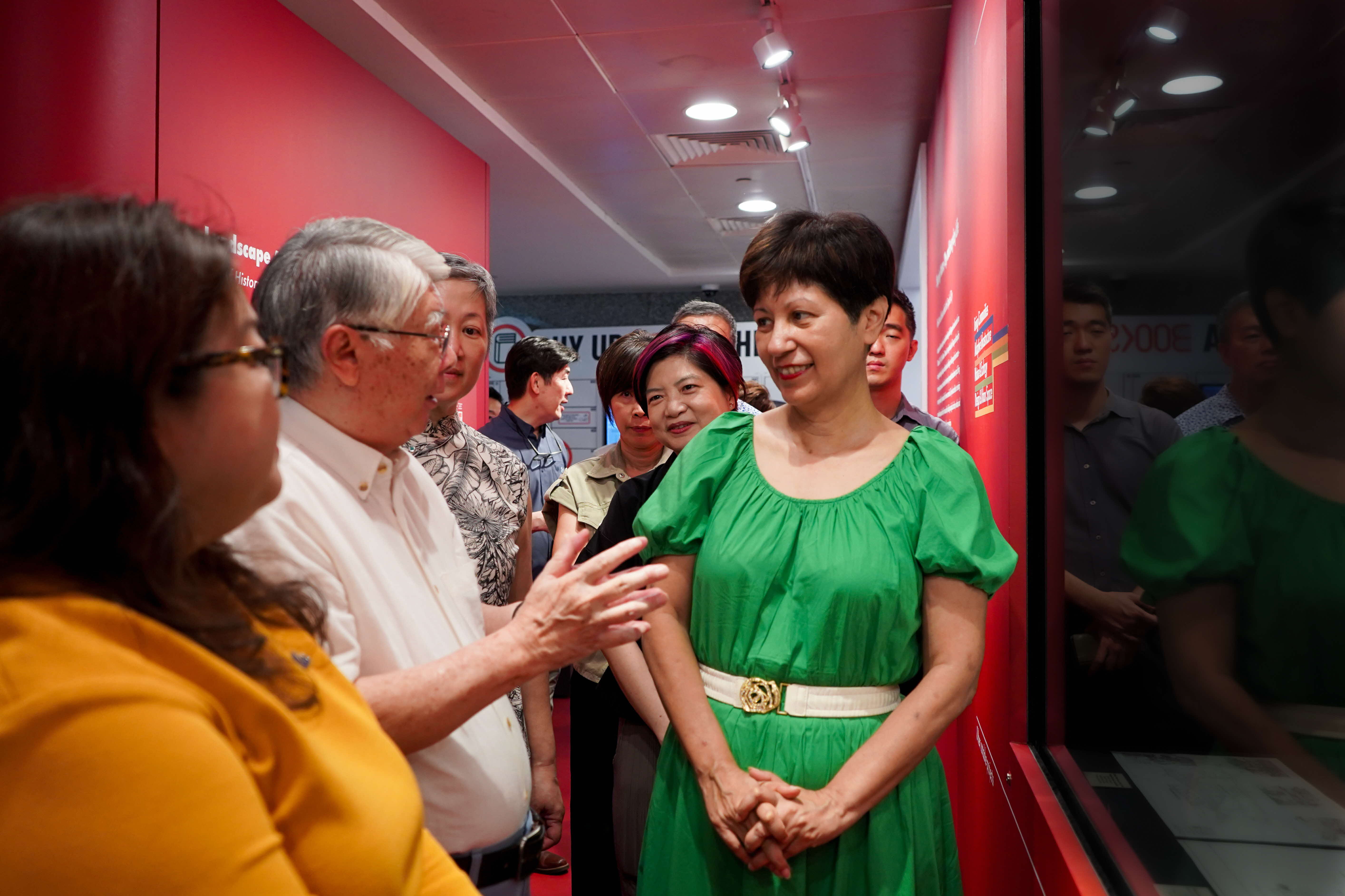
Yvonne Tan, President of the Singapore Institute of Landscape Architects (SILA), said: “Many of these places are so familiar that we sometimes forget they were carefully designed. And that is often the nature of landscape architecture. When it works well, it feels effortless. It becomes part of everyday life. This exhibition therefore tells a story that is often hidden in plain sight, This exhibition tells the story of how landscape architects have quietly contributed to Singapore’s transformation into one of the world’s most liveable and green cities, and how it continues to contribute to our vision of a City in Nature.”
“As our city grows denser and climate challenges become more complex, landscape architects will play an increasingly important role in integrating nature into everyday urban life, supporting biodiversity, cooling our city, and creating healthier environments for communities.”
Tracing Singapore’s landscape architecture journey
While SILA was formally established in 1985, the story of landscape architecture in Singapore began much earlier and evolved alongside the nation’s development.
One of the early pioneers featured in this exhibition is Mr Otto Fung Wai Chan, who in 1972 became the first landscape architect employed by the government in the Parks and Trees Unit of the Public Works Department. Among his early contributions were the design of East Coast Park in 1975 and the landscaping of the approach and coastal roads for Changi International Airport in 1978, projects that helped shape Singapore’s emerging green identity. These were not just projects. They were early expressions of a national vision, that greenery and nature should be integrated into the everyday life of the city.
The exhibition explores how the profession has matured alongside Singapore’s urban transformation. From early park provision and national greening initiatives in the 1960s and 1970s, landscape architecture has expanded significantly to include river naturalisation, ecological restoration, integrated mixed-use developments, infrastructure, therapeutic healthcare landscapes, and climate-responsive infrastructure.
Today, landscape architects contribute across Singapore’s Built Environment sector, integrating nature with architecture, infrastructure, and urban systems. Their work shapes parks, public housing landscapes, streetscapes, waterfronts, civic spaces, and ecological infrastructure across the island.
Beyond aesthetics, landscape architecture contributes to environmental performance, biodiversity enhancement, community wellbeing, and long-term urban resilience. The profession continues to evolve alongside Singapore’s urban and economic development, supporting the nation’s vision of a “City in Nature.”
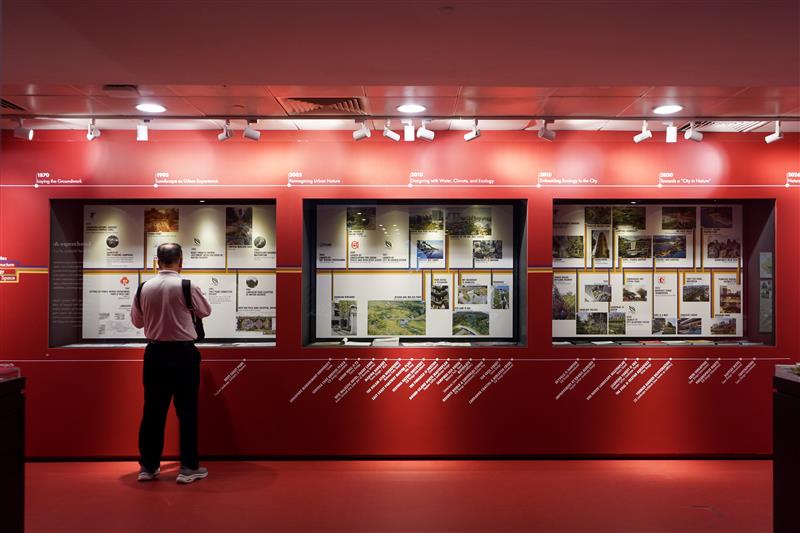
Through drawings, models, photographs, and archival materials, the exhibition presents landscape architecture as both a design discipline and a systems-based profession that integrates ecology, planning, engineering, and community needs.
Partnerships in shaping Singapore’s green landscape
The exhibition also highlights the role of partnerships in shaping the profession’s development in Singapore. Over the years, SILA has worked closely with government agencies, particularly the National Parks Board (NParks), to advance landscape planning, design, and professional practice.
One key milestone featured in the exhibition is the Singapore Greenery Streetscape Master Plan, commissioned by NParks in 2002 and developed by SILA. The plan guided the strategic enhancement of roadside greenery and urban streetscapes across Singapore, strengthening the city’s distinctive green identity.
Such collaborations reflect the broader partnership between government agencies, professional bodies, and industry practitioners in shaping Singapore’s green urban environment and supporting innovation across the Built Environment sector. These partnerships continue to support knowledge exchange, professional development, and innovation within the Built Environment sector.
Milestone projects featured
The exhibition presents a curated selection of significant projects across different decades and typologies, illustrating the breadth and impact of landscape architecture in Singapore. These include:
• Bidadari Park
• Bird Paradise
• Bishan–Ang Mo Kio Park
• East Coast Park
• Eco-Link@BKE
• Gardens by the Bay
• Jewel Changi Airport
• Jurong Lake Gardens
• Kampung Admiralty
• Khoo Teck Puat Hospital
• Labrador Nature Reserve
• Our Tampines Hub
• PARKROYAL on Pickering
• Plantation Village, Tengah
• Punggol Green
• Rainforest Wild Asia
• Singapore Botanic Gardens
• Sisters’ Islands Marine Park
• Southern Ridges
• Sungei Buloh Wetland Reserve
• And many more
Together, these projects demonstrate how landscape architecture has supported Singapore’s environmental vision while responding to changing ecological, urban, and societal needs.
Looking ahead
This exhibition is also significant as it supports the Singapore Architecture Collection, a national archive that documents Singapore’s modern and contemporary architecture.
We will be donating some of the materials presented in this exhibition to the Collection in contributing to capturing Singapore’s architectural and urban design journey. Through some of the drawings, models, photographs and archival materials presented here, the exhibition contributes to the broader effort of documenting landscape architecture as part of Singapore’s architectural and urban history. This is important because landscapes evolve over time.
The places we design today will continue to shape how Singaporeans experience the city for many years to come. Capturing these stories helps future generations understand how these places came to be.
In just six decades, Singapore has transformed itself into a dense yet remarkably green urban environment. Landscape architecture has played a quiet but meaningful role in that journey.
As Singapore continues to evolve, landscape architecture will play an increasingly important role in integrating nature within dense urban environments. Green spaces today are multifunctional, supporting biodiversity, ecological connectivity, urban cooling, and public health. Nature-based solutions are also becoming increasingly important in addressing challenges such as climate adaptation, flood mitigation, and coastal resilience.
Through continued capability development, innovation, and collaboration across sectors, landscape architects will remain an important part of Singapore’s efforts to create a sustainable, resilient, and liveable city.
Landscape architecture is ultimately about one simple idea: how nature and people can thrive together in the places we love or call home. More importantly, I hope the exhibition also sparks conversations about the role landscapes will play in shaping Singapore’s next chapter.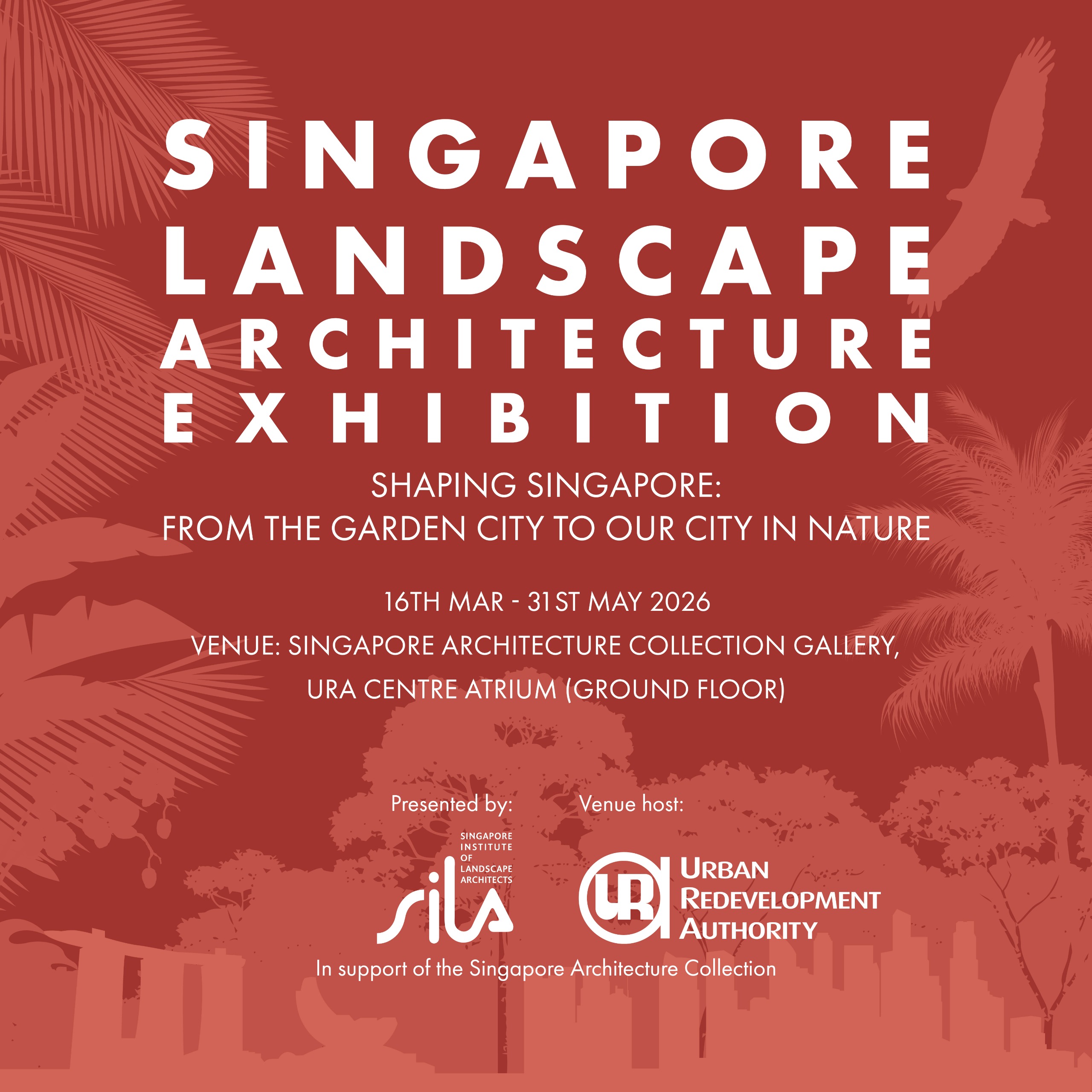
Venue:
Singapore Architecture Collection Gallery
URA Centre Atrium (Ground Floor)
Open to the public from 16 March 2026
Runs until 31 May 2026
Opening hours:
Mon – Sat: 9:00am – 5:00pm
Closed on Sundays and Public Holidays